
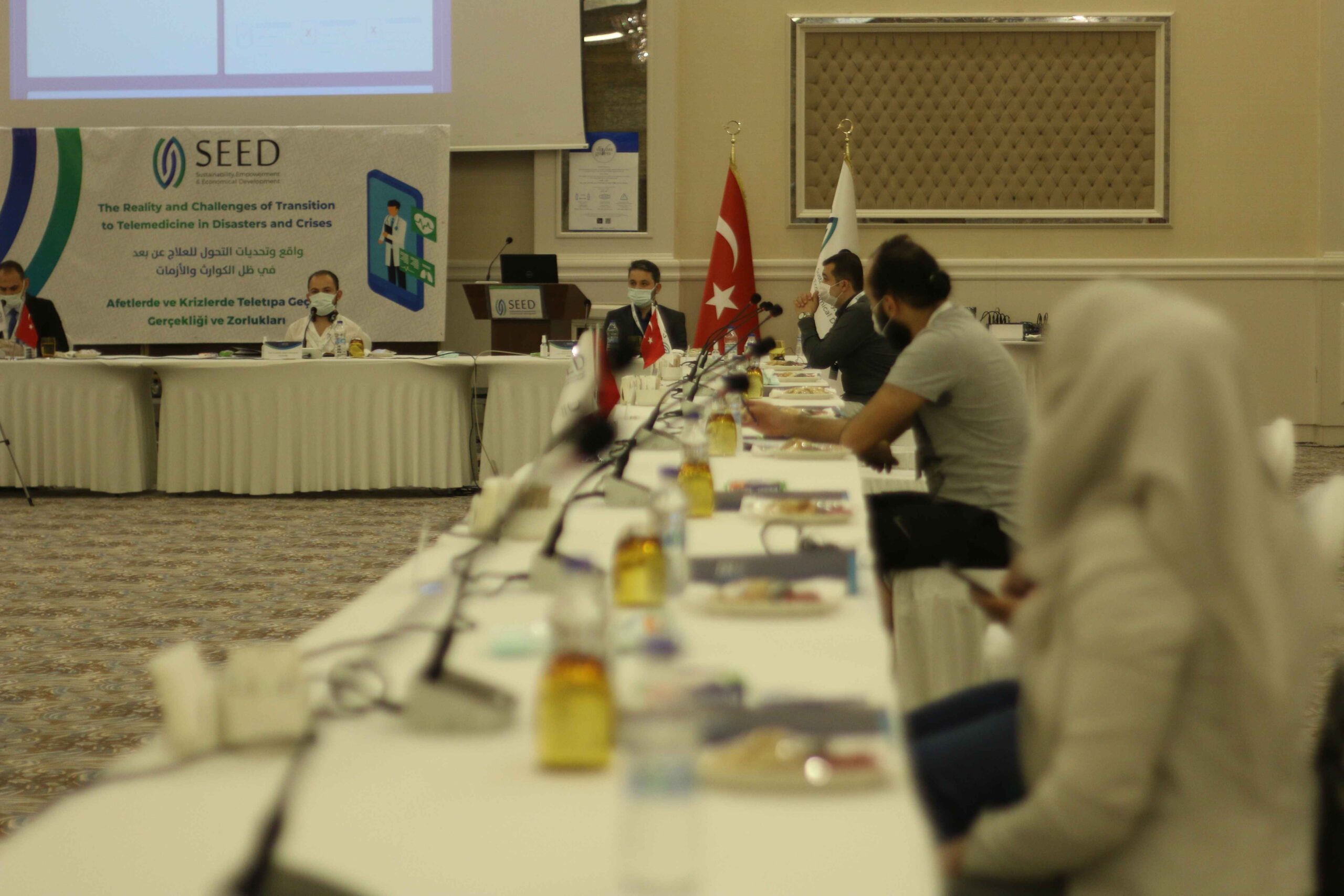
The Telemedicine Conference, attended by various international and regional organizations, witnessed significant participation from the World Health Organization and the Turkish Red Crescent. Hosted by Seed for Sustainable Development, the conference addressed the theme “The Realities and Challenges of Transitioning to Telemedicine Amid Disasters and Crises” in Gaziantep, Turkey, with strict adherence to COVID-19 safety and prevention protocols.
Eng. Bassam Al-Manasra, Executive Director of Seed for Sustainable Development, inaugurated the conference by presenting the rationale and objectives in light of the ongoing pandemic. He emphasized the global shift towards telemedicine and the need to develop services that align with the demands of the knowledge era. Additionally, he highlighted the essential role organizations play in addressing the challenges posed by COVID-19, commending the collaboration agreements established between Seed and other institutions.
In the first session, Dr. Ahmed Celik from the Turkish Red Crescent (Kızılay) presented the organization’s significant contributions during the COVID-19 pandemic, which included the implementation of two primary services: social and psychological support through social networks.
Dr. Mohammed Ibrahim, representing the Union of Medical Care and Relief Organizations (UOSSM), discussed the organization’s initiatives in the healthcare sector during the pandemic. He pointed out several significant achievements, including the development of programs focused on protection, psychological and social support, primary healthcare, and establishing isolation centers that adhered to safety protocols. He expressed gratitude to Seed for facilitating this important workshop.
Continuing in the theme of telemedicine, Dr. Oqba Ghenem from Syria Relief and Development (SRD) presented a paper entitled “SRD’s Practices in the Health Sector Amid COVID-19”, in which he addressed the provision of crucial virtual services to those in need and the training of medical professionals remotely. He emphasized the importance of adapting in the face of crises and prioritizing telemedicine in ongoing initiatives.
Similarly, Dr. Mohamed Al-Issa from the Syrian American Medical Society (SAMS) highlighted ongoing treatment efforts for COVID-19 patients and the training of healthcare personnel, extending his appreciation to Seed for organizing the conference.
The second session featured Dr. Mohamed Abu Nada, the Partnership and Network Coordinator for Seed in Southern Turkey. Dr. Manuel de Lara, representing the World Health Organization (WHO), elaborated on the obstacles and challenges that telemedicine encounters, such as the absence of physical examinations, poor image quality, and the need for developing specialized telemedicine technologies, , among other technical and professional observations.
Reflecting on Seed’s initiatives in telemedicine, Dr. Ahmed Dawood, the Director of the Telemedicine Program at Seed, outlined the organization’s commitment to providing free services to marginalized communities. He discussed the identification of rare diseases, the establishment of multiple agreements with international organizations, collaborations with various Turkish hospitals, and the involvement of over 100 doctors in the network who have provided care to more than 1,000 patients.
The final presentation, delivered by Dr. Sulaiman Haj Ibrahim, a consulting physician at Seed, cherished the significant impact of consulting physicians in promoting volunteerism and supporting telemedicine initiatives. He shared his positive experiences and the beneficial outcomes of his work as a consulting physician with Seed.
In conclusion, the conference highlighted the vital importance of telemedicine services and the necessity of utilizing appropriate technologies to ensure high-quality care delivery. It also emphasized the importance of fostering a culture of volunteerism among healthcare professionals to enhance the quality of patient care and protect patient privacy. Furthermore, a coordinated effort from regional, local, and international institutions is essential to support and implement projects that effectively mitigate the impacts of the COVID-19 pandemic.